



Nestled amidst the picturesque landscape of Mường Luân 1 village, the ancient tower seems to burst with new vitality: moss has been removed, the patterns have been restored, the concrete walkway is clean, and a reception house has been erected in harmony with the scenery. In the sun of the highlands, the tower’s silhouette appears both ancient and fresh, opening up an opportunity for the site to become a unique experiential space for tourists who love culture, history, and exploring the pristine values of the Lao community in the highlands.
.jpg)
The Mường Luân Tower was built in the 16th century, featuring an elegant stupa shape, standing about 15m tall, and divided into three balanced sections: base, body, and spire. The base is square, and the body tapers towards the top, evoking the image of a graceful Lao young woman, with her head facing Vietnam and her back resting against the land of Laos - a profound symbol of the cultural harmony between the two nations over hundreds of years.
The patterns on the tower’s body are the highlights that create its unique beauty. Pairs of small winding dragons, stylized lotus petals, sun symbols embedded with mirrors reflecting light from all directions... are crafted from terracotta mixed with red, brown, and grey hues. All of this brings an ancient, rustic, yet spirited appearance, reflecting the ingenuity of the highland artisans of the past who knew how to utilize bricks, lime, sand, and molasses - completely indigenous materials - to build a structure that endures over time.
.jpg)
Beyond its aesthetic value, Mường Luân Tower is also a precious source of documentation for researching the architecture and beliefs of the ancient Lao people in Vietnam. The manual construction technique, local materials, and unique stupa structure attest to the outstanding technical level of the mountainous inhabitants centuries ago. On February 9, 1991, the tower was ranked as a National Architectural and Artistic Monument by the Ministry of Culture and Information (now the Ministry of Culture, Sports and Tourism).
Lò Văn Khánh, Chief of Office of the People’s Council and People’s Committee of Mường Luân commune, said: According to many elders in Mường Luân, previously, next to the tower was a three-room pagoda, 6m wide and 12m long - the center of religious life for the Lao community in the Mường Luân area. The pagoda now only remains as a foundation, but the memories of the festivals of the past are still intact in the hearts of the elderly in Mường Luân.
.jpg)
During the main ceremony, the statue of Buddha was carried from the pagoda to the base of the tower for the bathing ritual using five-colored grass water. The sound of chanting echoed through the mountainous space, blending with the scent of herbs, allowing not only the villagers but also tourists to feel the sanctity gently spreading in the breeze.
The elders recounted that in those days, the entire village was busy preparing. Some families cooked scented water, others prepared offerings, young people repaired the sedan for the procession, and children excitedly followed the adults. The festival was not only a spiritual ritual but also a day of solidarity, where the community gathered, shared joy, and entrusted their wishes for the new season. On the main day of the festival, laughter mixed with the sound of drums and khèn (mouth organ) during lăm vông dance performances, traditional games like tug-of-war, stick pushing, and water splashing... creating a lively atmosphere that united the community.
.jpg)
April 2025 marked a turning point when the Bun Huột Nặm Festival - the traditional Water Splashing Festival of the Lao people in Mường Luân - was restored after nearly half a century of interruption. The ritual part began on the Mã River, where the Buddha statue was carried down to the river for the bathing ceremony with herbal water. The cool, clear water washes away worries, carrying aspirations for good harvests and a peaceful life.
The festival part was vibrant with traditional lăm vông dances, poignant folk songs, and folk games such as tung còn (tossing a ball through a ring), tó má lẹ (a throwing game), “snake catching skinks,” and “turtle hatching eggs”... The wrist-tying ritual and the water splashing for good luck attracted a large number of residents and tourists, creating a bustling and colorful scene, true to the spirit of the traditional Lao festival.
.jpg)
With the revival of the festival, along with the restoration of Mường Luân Tower, Mường Luân commune possesses an important foundation for developing cultural-historical tourism, spiritual tourism, and eco-tourism.
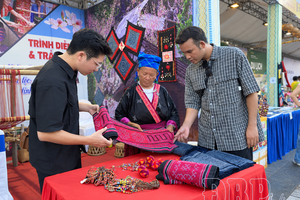
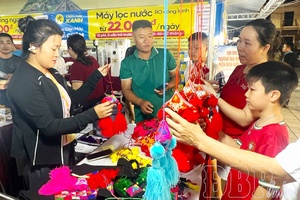
Besides the ancient tower, Mường Luân commune also has traditional festivals such as the village worship ceremony and the new rice ceremony of the Xinh Mun people, and the water splashing festival of the Lao people... which are valuable materials for building experiential tourism products. The cultural diversity of the Lao, Thái, Mông, and Khơ Mú communities, with unique cuisine, traditional costumes, brocade weaving... opens up many directions for developing community-based tourism associated with local cultural experiences.
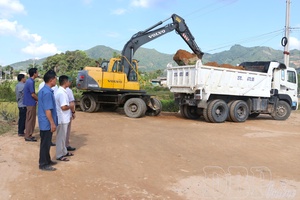
Not only rich in culture, Mường Luân also possesses eco-tourism potential with its system of hills, mountains, mineral springs, Pá Vạt hot springs, and hydropower lakes... which have been surveyed by businesses for exploitation in the near future. The planned project to build Linh Phước Tự is also expected to create a new highlight for the spiritual space of the region.
.jpg)
Towards 2030, the Mường Luân commune Party Committee sets the goal of becoming the eastern tourism destination of the province, based on effectively exploiting natural potential, historical relics, and intangible cultural heritage; while simultaneously protecting the environment, improving people’s lives, and maintaining local security and order.
Amidst the changing pace of life, Mường Luân Tower still stands there - contemplative, ancient, and steadfast. After the restoration, the tower’s spire looks even more like it has been “awakened” from a long slumber, becoming a cultural highlight of Mường Luân and a repository of stories from hundreds of years of history. And now, with the Bun Huột Nặm Festival restored, as cultural values are being awakened and spread, Mường Luân Tower continues its journey - simultaneously a witness to history and a bridge bringing Mường Luân closer to tourists near and far.
Diệp Chi
.jpg)
.jpg)
.jpg)
.jpg)
.jpg)
.jpg)
.jpg)

.jpg)
.jpg)
.jpg)
You have 500/500 characters left
Please enter 5 or more characters!!!